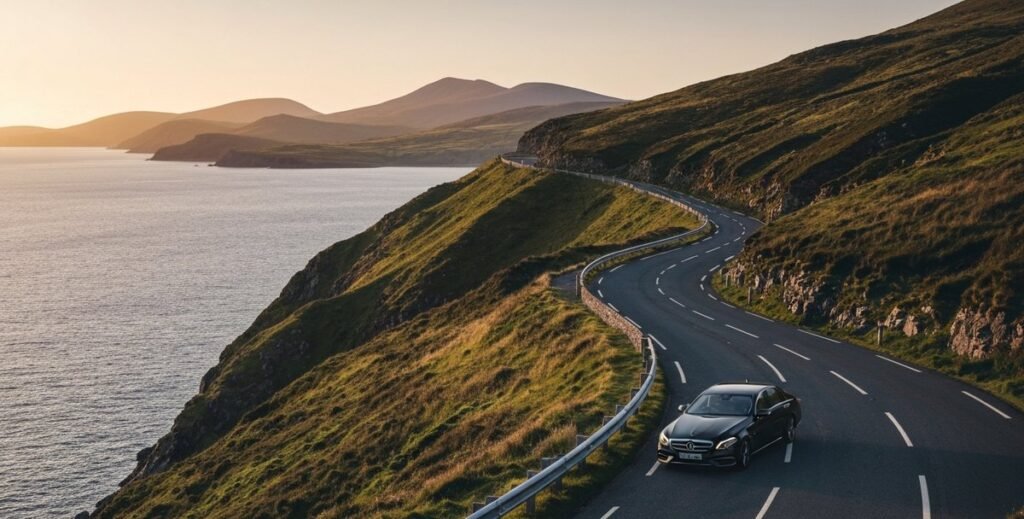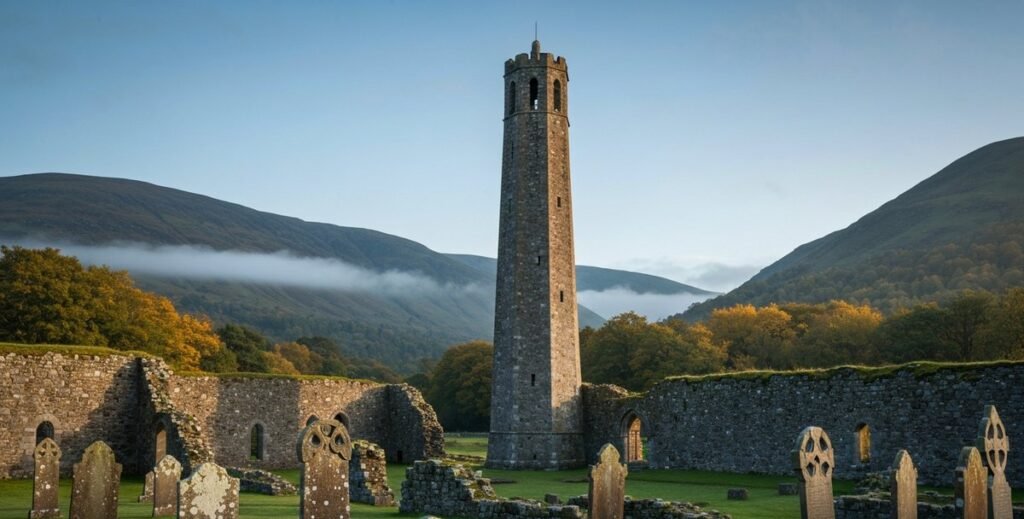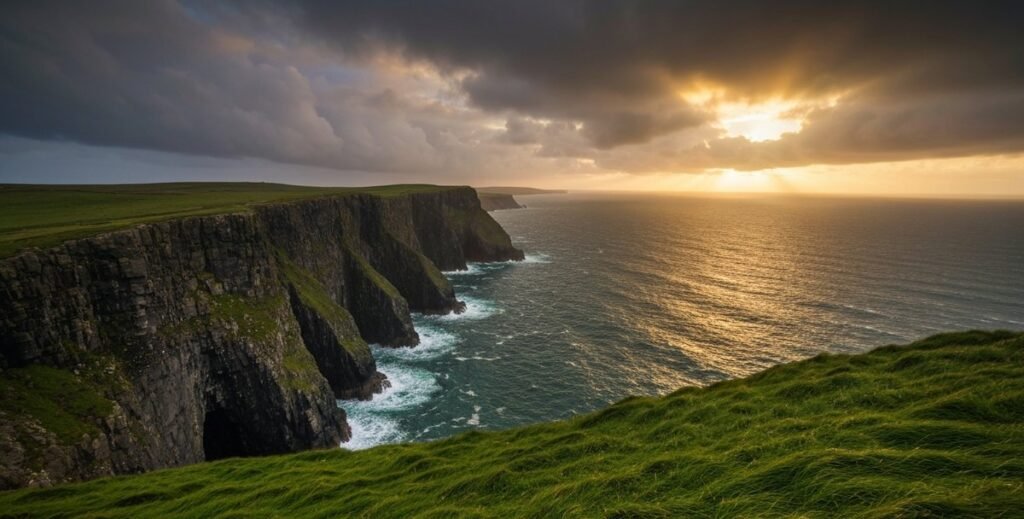
The honest answer up front: a Giant’s Causeway day trip from Dublin is a long day — roughly 260 to 265km each way, 2 hours 50 minutes to 3 hours of driving in each direction — but it’s genuinely doable, and most people who do it say it was worth the early start. The Causeway itself is free to walk onto, roughly 40,000 interlocking basalt columns formed by volcanic activity 50 to 60 million years ago, and it sits on Northern Ireland’s Causeway Coast alongside Carrick-a-Rede Rope Bridge, the Dark Hedges and Dunluce Castle — all close enough to combine into one route.
The trade-off is the same one that applies to any Dublin-to-Antrim run: you’re crossing into a different jurisdiction, a different currency, and a genuinely long stretch of road. This guide covers realistic timing, the border-crossing details nobody explains clearly, and what’s actually worth stopping for on the way.
Quick answers
- Can you do the Giant’s Causeway from Dublin in a day? Yes — depart by 7am, back by 9–10pm, giving you 3–4 hours on the Causeway Coast itself.
- How far is it? About 260–265km, roughly 2h50m–3h each way via the M1 and A26 through Belfast.
- Do I need a passport? Irish and British citizens don’t, under the Common Travel Area. Other nationalities should carry one, though there’s no physical checkpoint.
- What currency? Pound Sterling (GBP) — euros aren’t generally accepted once you cross the border.
- Self-drive or private driver? For a single long day covering unfamiliar roads in both jurisdictions, most visitors find a private driver removes the fatigue that otherwise eats into the day.
Giant’s Causeway — private day trip from Dublin
Pickup from your Dublin hotel or Dublin Airport. Border crossing handled, fixed price agreed before you travel.
How Far Is the Giant’s Causeway from Dublin?
The Giant’s Causeway sits on the north coast of County Antrim, near Bushmills, about 260 to 265km from Dublin. In normal traffic that’s a 2 hour 50 minute to 3 hour drive each way, most of it via the M1 motorway north through Newry, skirting Belfast, then the A26 and A2 coast road on to Bushmills.
Unlike the Dublin–Belfast run, this route stays on motorway or dual carriageway for most of its length, so the driving itself isn’t the hard part — the length of the day is. Add stops, lunch and the return leg and you’re realistically looking at 12 to 14 hours door to door if you’re covering the Causeway and one or two nearby stops in the same day.
The Border: What Actually Changes
Crossing from the Republic into Northern Ireland on this route is the same as the Dublin–Belfast crossing covered in our Dublin Airport to Belfast guide: no physical checkpoint, no passport control for Irish or British citizens under the Common Travel Area, and free-flowing traffic. What changes:
- Currency. Northern Ireland uses Pound Sterling (GBP, £). Euros aren’t generally accepted outside a handful of tourist-facing spots, and where they are, the exchange rate won’t be in your favour. Card payment works almost everywhere.
- Speed limits. The Republic uses km/h (120 km/h motorway maximum); Northern Ireland switches to mph (70 mph motorway/dual carriageway maximum, about 113 km/h).
- Road signage. Distances and speeds switch from metric to imperial the moment you cross.
None of this is a real obstacle if you know it’s coming — it just catches people out mid-drive if they don’t.
What You’ll Actually See
The Giant’s Causeway
The Causeway itself is roughly 40,000 interlocking basalt columns, most with five or six sides, formed by cooling lava flows around 50 to 60 million years ago. It was declared a UNESCO World Heritage Site in 1986. Walking onto the stones themselves is free — the visitor centre charges for parking and the exhibition, not for the Causeway. Allow at least an hour to walk the main formations properly; longer if you want to follow the clifftop path for the wider views back over the columns.
Carrick-a-Rede Rope Bridge
About 30 minutes east of the Causeway, this rope bridge spans 20 metres and hangs 30 metres above the rocks, connecting the mainland to the small island of Carrickarede. It’s a genuine highlight, not a gimmick — book a crossing slot online in advance in summer, as capacity is limited and it does sell out.
The Dark Hedges
A short detour inland near Stranocum, Ballymoney: an avenue of beech trees planted around 1775, made famous as the King’s Road in Game of Thrones. It’s a 15–20 minute stop, best early or late in the day when the coach parties have thinned out.
Bushmills Distillery
Just 5km from the Causeway, Old Bushmills holds a distilling licence dating to 1608 — the oldest licensed whiskey distillery in the world. A tour and tasting adds an hour to ninety minutes if it fits your schedule.
Dunluce Castle
A ruined medieval castle perched on a cliff edge between the Causeway and Portrush — striking from the road even if you don’t stop, and a worthwhile 20-minute detour if you do.
Self-Drive, Bus Tour or Private Driver?
Self-drive gives full flexibility at the lowest upfront cost, but you’re driving 5-plus hours round trip on top of walking the sites, in a jurisdiction with different speed limits and signage partway through the day. Fatigue on the return leg is real.
Bus tours from Dublin exist and cover the main stops, but run 13 to 14 hours on a fixed schedule with fixed stop lengths — you don’t choose how long you spend at the Causeway itself.
A private driver removes the two things that make this trip tiring: the driving itself, and the schedule. You can linger at Carrick-a-Rede if the crossing slot allows it, skip Dunluce if you’re short on time, and the driver handles the currency and speed-limit switch without you thinking about it.
Private day trip
Giant’s Causeway & Antrim Coast
Best Time of Year to Visit
May, June and September offer the best balance — long daylight, more settled weather than autumn, and the Causeway Coast’s worst crowding (July–August) not yet in full swing.
July and August are the busiest months on the whole Causeway Coast; the visitor centre car park and the Carrick-a-Rede booking slots fill early. Book ahead if you’re travelling in this window.
Winter visits are much quieter and the Causeway itself is genuinely dramatic in a storm, but daylight is short — a winter day trip from Dublin means less time at each stop, and some smaller attractions reduce hours.
Frequently Asked Questions
Is the Giant’s Causeway worth a day trip from Dublin?
Most visitors who do it say yes, but go in knowing it’s a long day — 12 to 14 hours door to door once you factor in the drive, the sites, and the return leg. If you have more time in Ireland, splitting it into an overnight in the Causeway Coast area makes the pace far more relaxed.
How long does it take to drive from Dublin to the Giant’s Causeway?
Around 2 hours 50 minutes to 3 hours each way, covering roughly 260–265km via the M1 and A26. Add time for the border crossing area near Newry and Belfast at peak traffic hours.
Do I need a passport to visit the Giant’s Causeway from Dublin?
Irish and British citizens don’t, under the Common Travel Area. Other nationalities should carry a passport, though there’s no physical checkpoint at the road crossing.
Is the Giant’s Causeway free to visit?
Walking onto the stones is free. The visitor centre charges for parking and its exhibition — you don’t need either to see the Causeway itself, but the exhibition adds useful context if you have time.
Can I combine the Causeway with Carrick-a-Rede and the Dark Hedges in one day from Dublin?
Yes, and most private day trips do exactly this, but it’s a full day — realistically you’re choosing depth at two or three stops rather than lingering at all four (Causeway, Carrick-a-Rede, Dark Hedges, Dunluce). Book the Carrick-a-Rede crossing slot in advance if it’s a priority.
What currency do I need for the Giant’s Causeway?
Pound Sterling (GBP). Euros aren’t generally accepted in Northern Ireland outside a few tourist spots, and card payment covers almost everything — the visitor centre, cafés and shops all take cards.
Can a Dublin Airport taxi take me straight to the Giant’s Causeway?
Not sensibly — a metered NTA rank fare doesn’t cover a 260km cross-border run, and most rank drivers will decline it. A pre-booked fixed-fare private transfer, arranged in advance, is the practical way to do this by car.