Glendalough is one of the most visited sites in Ireland, and for good reason. Tucked into a glacial valley in County Wicklow, this 6th-century monastic settlement offers a rare combination of genuine history, mountain scenery and an easy drive from the capital. At roughly 50 kilometres south of Dublin city centre, it takes about an hour to get there — making it the most rewarding Glendalough day trip from Dublin you can do in a single day.
What Is Glendalough?
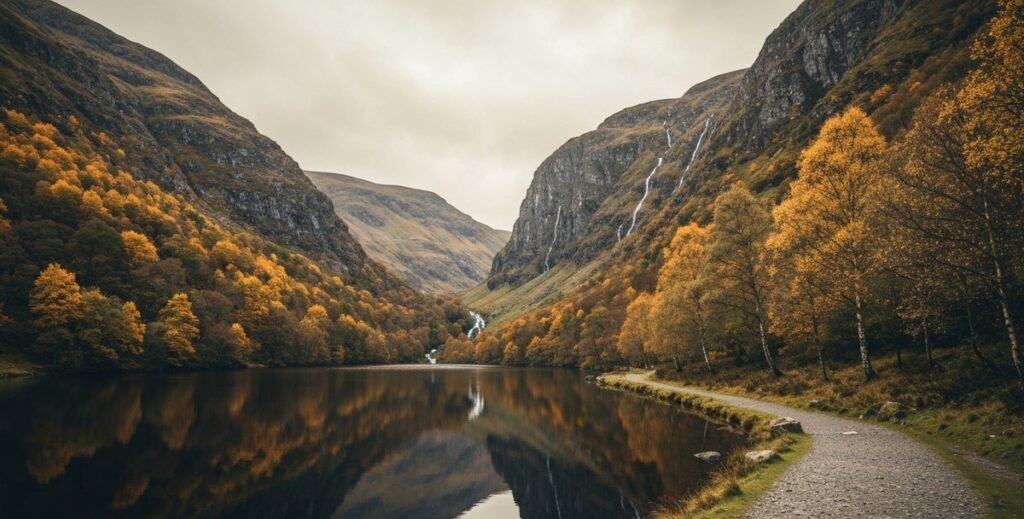
The name comes from the Irish Gleann Dá Loch — Valley of Two Lakes. That is exactly what you get: two glacier-carved lakes set beneath the dark ridges of the Wicklow Mountains, surrounded by ancient ruins that have stood since the early Christian period.
The settlement was founded in the 6th century by St Kevin (Caoimhín in Irish), a monk who retreated to the valley looking for solitude and ended up attracting hundreds of disciples. By the 9th and 10th centuries it had grown into one of the most important monastic cities in Europe, drawing pilgrims from across the continent. Viking raids and later Norman incursions gradually ended its influence, but the ruins never disappeared.
Today the site is managed by the Office of Public Works as a national monument. The core monastic enclosure — including the gatehouse, cathedral and famous Round Tower — sits beside the Lower Lake. The Upper Lake, a kilometre further up the valley, is wilder and less visited.
What You Will See
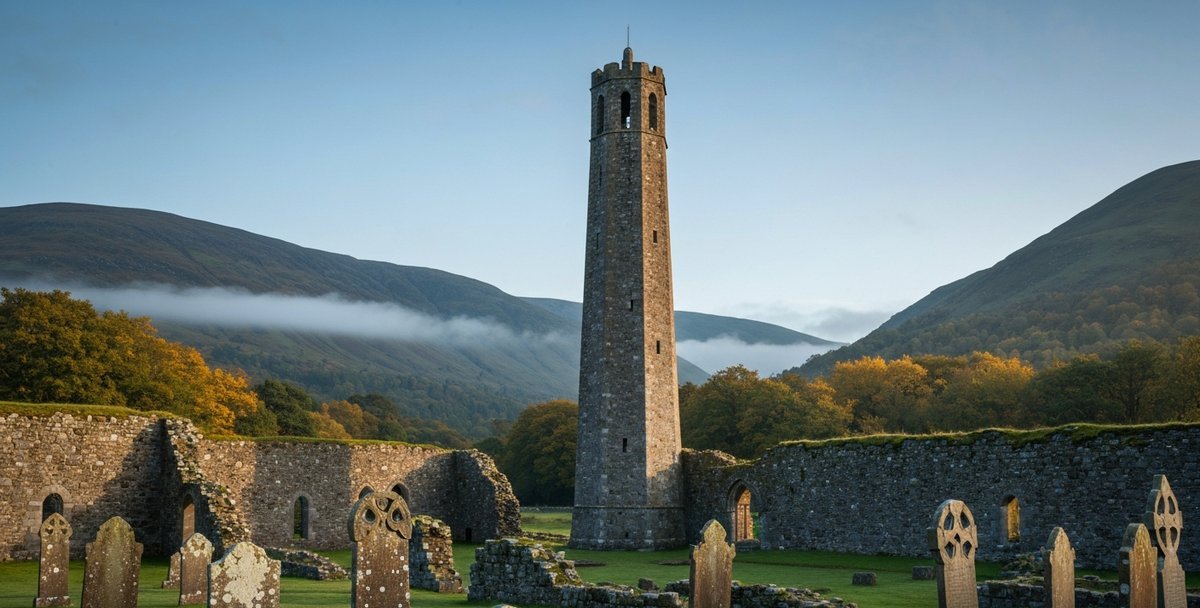
The Round Tower is the landmark most people picture when they think of Glendalough. Standing roughly 30 metres tall, it was built somewhere between the 10th and 12th centuries, most likely as a bell tower and place of refuge during raids. The conical cap was reconstructed in the 19th century, but the rest of the tower is original. It is in remarkably good condition.
The Cathedral of St Peter and Paul is the largest of the surviving churches on site — a Romanesque structure with carved stonework around the west doorway. Most of what stands dates from the 12th century, though the nave is older.
St Kevin’s Kitchen is not a kitchen at all. It is a small oratory with a miniature round tower built into its roof, and the unusual profile earned it the nickname. It dates from the 12th century and is one of the best-preserved early Irish church buildings anywhere in the country.
The Two Lakes are as important as the ruins. The Lower Lake sits right beside the monastic site and is the calmer, more accessible of the two. The Upper Lake requires a short walk along the valley floor and rewards you with wilder scenery and far fewer people. The Poulanass Waterfall, a short climb from the Upper Lake car park, is worth the legs.
How Far Is Glendalough from Dublin?
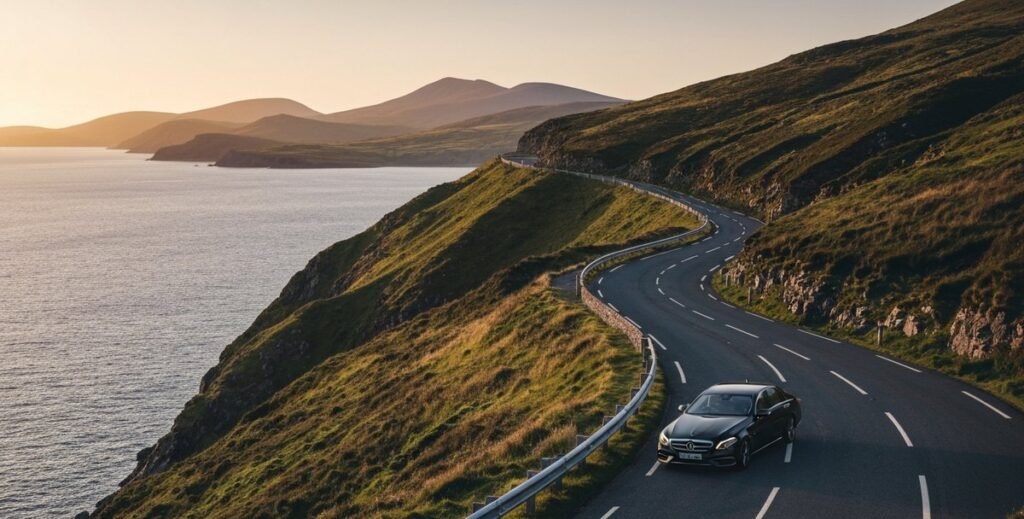
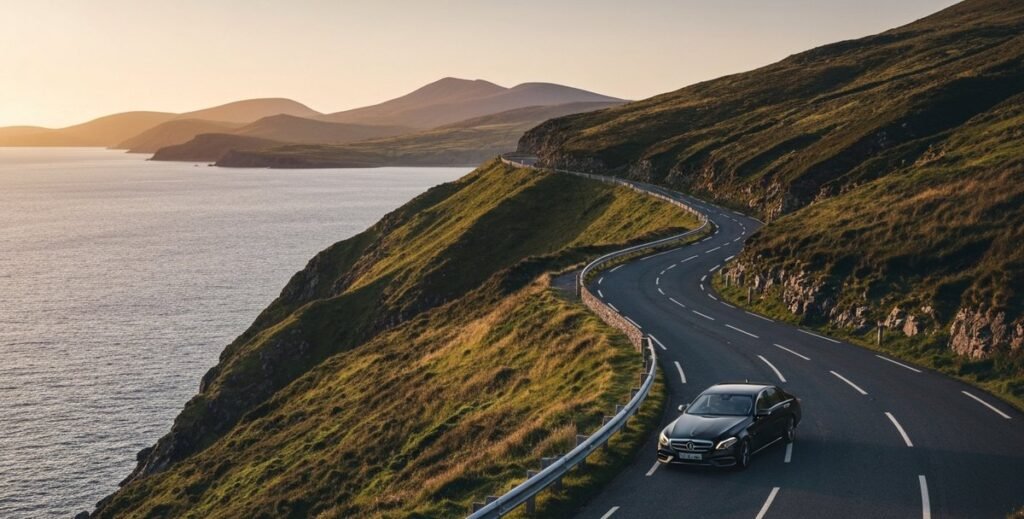
Glendalough is approximately 50 kilometres from Dublin city centre. The most direct route follows the N11/M11 south and then the R755 through the village of Laragh into the valley. In normal traffic, the drive takes around 55 to 65 minutes. On summer weekends, traffic on the N11 can add 15 to 20 minutes, so an early departure makes a real difference.
Getting There: Your Options Compared
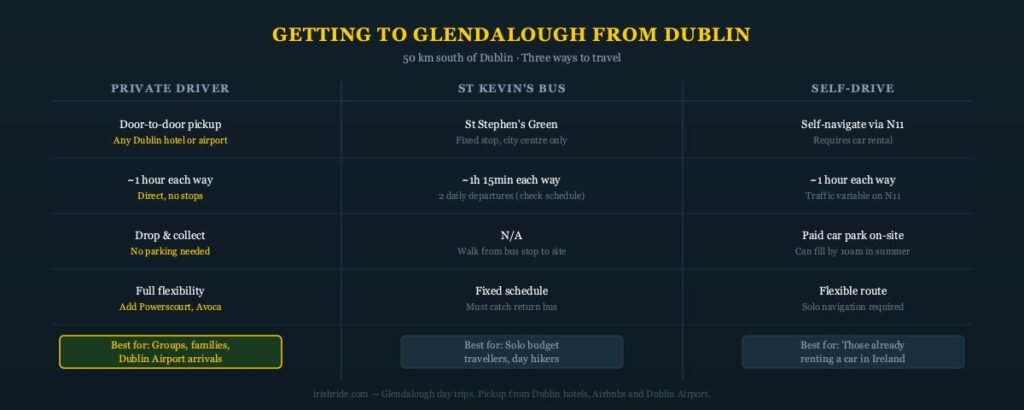
There are three practical ways to make the trip. Each suits a different kind of traveller.
| Private Driver (Irish Ride) | St Kevin’s Bus | Self-Drive | |
|---|---|---|---|
| Pickup | Hotel or airport, door-to-door | St Stephen’s Green, Dublin | Your own starting point |
| Departure flexibility | Any time you choose | Fixed schedule (check seasonally) | Full flexibility |
| Journey time | ~1 hour direct | ~1.5 hours (stops en route) | ~1 hour (traffic dependent) |
| Parking stress | None | None | High in July–August |
| Add-on stops | Yes — Powerscourt, Avoca etc. | No | Possible but self-managed |
| Return flexibility | Leave when ready | Fixed return times | Full flexibility |
| Best for | No planning, no timetable, no parking stress | Budget travellers happy to work around a fixed schedule | Travellers who want full independence and don’t mind driving |
St Kevin’s Bus is the economy option, running from St Stephen’s Green mainly across the March–September season (two weekday departures, more at weekends — check current times before you go). It is reliable but runs to a fixed timetable, so if you miss the return departure you have a problem. Self-drive gives you control but parking at Glendalough is genuinely congested from late June through August — the main car park fills before 10am on sunny weekends and the overflow areas charge separately.
A private driver removes every logistical headache. Irish Ride will collect you from your hotel or Dublin Airport at whatever time suits, drive you direct to Glendalough, wait or return on your schedule, and can add a stop at Powerscourt Waterfall or the Avoca village on the way back — both within 20 minutes of Glendalough.
Suggested Itinerary
This schedule works well for most visitors and still gets you back in Dublin in time for dinner.
8:30am — Depart Dublin. Leaving this early avoids the worst of the N11 traffic and means you reach the site before the coach tours arrive.
9:30am — Arrive Glendalough. The Visitor Centre opens at 9:30am (OPW admission charged for the exhibition; the grounds and monastic site are free to walk). Start with the centre if you want context — the short introductory film is useful.
9:45am–11:15am — Monastic enclosure. Walk the core site: the Gateway, Round Tower, Cathedral, St Kevin’s Kitchen, the Priest’s House and the old graveyard. Take your time; there is a lot to read in the stonework.
11:15am–12:30pm — Lakeside walk to the Upper Lake. The Green Road along the south bank is a flat, easy walk with good views of both lakes. The Poulanass Waterfall add-on takes about 30 extra minutes and is worth it if the weather is decent.
12:30pm–1:30pm — Lunch. The Glendalough Hotel does a solid lunch and is just beside the lower car park. In good weather, a packed lunch beside the Lower Lake is hard to beat.
1:30pm–2:30pm (optional) — Drive to Powerscourt Waterfall. At 121 metres, it is marketed as Ireland’s highest waterfall (a taller one exists in a remote part of Sligo/Leitrim, but Powerscourt is the tallest anyone can easily visit) and it’s only 20 minutes from Glendalough. Admission is charged separately but the setting is spectacular.
3:00pm–4:00pm — Begin return to Dublin. Without traffic you will be back in the city centre by 4:00–4:30pm. A stop in Avoca village (home of Avoca Handweavers, one of Ireland’s oldest surviving businesses) adds 20 minutes and makes a good end to the day.
Best Time to Visit
Spring (April–May) is arguably the best time. The crowds are manageable, the light is good and the hills are green without being obscured by summer haze. Autumn (September–October) runs it close — the colour in the trees around the lakes is genuinely beautiful and the coach-tour season has wound down.
Summer (June–August) is the busiest period. Glendalough is one of the most-visited OPW sites in the country and it shows on a sunny July Saturday. Arriving before 10am is not optional advice in summer — it is the difference between a peaceful morning and a car park queue.
Winter visits are quieter and the valley can be atmospheric in low light, but some facilities have reduced hours and the upper trails can be muddy or icy.
Is Glendalough Suitable for Children?
Yes, well suited. The monastic site is flat and easy to walk, the lakes are visually engaging for younger visitors, and the Poulanass Waterfall path is achievable for most children above six or seven with adult supervision. There are no significant stiles or technical terrain on the main routes. The Visitor Centre has a good introductory exhibition pitched at a general audience. Irish Ride’s vehicles are comfortable for families and the private transfer means no waiting around at bus stops with tired children.
Combining Glendalough with Powerscourt
Both sites sit in the Wicklow Mountains and are roughly 20 minutes apart. Powerscourt Estate includes formal gardens (one of the great garden landscapes in Ireland) and, a few kilometres from the main estate, Powerscourt Waterfall. If you are taking a full day and have a private vehicle, the pairing makes natural sense — monastic history in the morning, gardens or waterfall in the afternoon. Irish Ride can build this into your itinerary at the booking stage.
Book Your Glendalough Day Trip
If you want a straightforward, stress-free day out, Irish Ride offers private transfers from Dublin to Glendalough with flexible pickup times, hotel collection and the option to add Powerscourt Waterfall or other Wicklow stops. No parking, no timetables, no compromises.
Book the Glendalough Day Trip with Irish Ride →
Frequently Asked Questions
How far is Glendalough from Dublin?
Glendalough is approximately 50 kilometres south of Dublin city centre. The drive via the N11/M11 and R755 takes around 55 to 65 minutes in normal conditions. Expect longer on summer weekends when traffic on the N11 builds from mid-morning.
Is Glendalough worth visiting?
It is one of the best day trips from Dublin, full stop. The combination of early Christian ruins, mountain scenery and two lakes is unlike anything else within an hour of the city. Even a half-day visit feels complete if you do the monastic site and the Lower Lake walk.
How long should I spend at Glendalough?
Two to three hours is enough to see the monastic site and walk along the Lower Lake. Allow a full day — five to six hours — if you want to reach the Upper Lake, do the Poulanass Waterfall trail and have a proper lunch. Adding Powerscourt on the return adds another one to two hours.
Can I combine Glendalough with Powerscourt Waterfall?
Yes, easily. Powerscourt Waterfall is about 20 minutes from Glendalough by car. If you are driving yourself or have a private driver, it makes sense to pair both in a single day. Irish Ride can include the stop as part of your Glendalough day trip booking.
What is the best time of year to visit Glendalough?
Spring (April–May) and autumn (September–October) offer the best balance of good weather and manageable crowds. Summer is the most popular season but also the busiest — arrive before 10am to beat the coach tours. Winter visits are quieter but some facilities close or reduce hours.
Is Glendalough suitable for kids?
Glendalough is one of the more family-friendly heritage sites in Ireland. The main monastic enclosure is flat, the lakes are engaging and the shorter walking trails are accessible to most children. The Visitor Centre exhibition works well for older children with an interest in history.
Can I get to Glendalough without a car?
Yes. St Kevin’s Bus runs from St Stephen’s Green in Dublin to Glendalough and back, mainly across the March–September season. Journey time is approximately 1.5 hours each way. The service runs to a fixed timetable and isn’t guaranteed to run year-round, so check the current schedule carefully before you go. A private transfer with Irish Ride is the other option — more flexible, with door-to-door pickup.