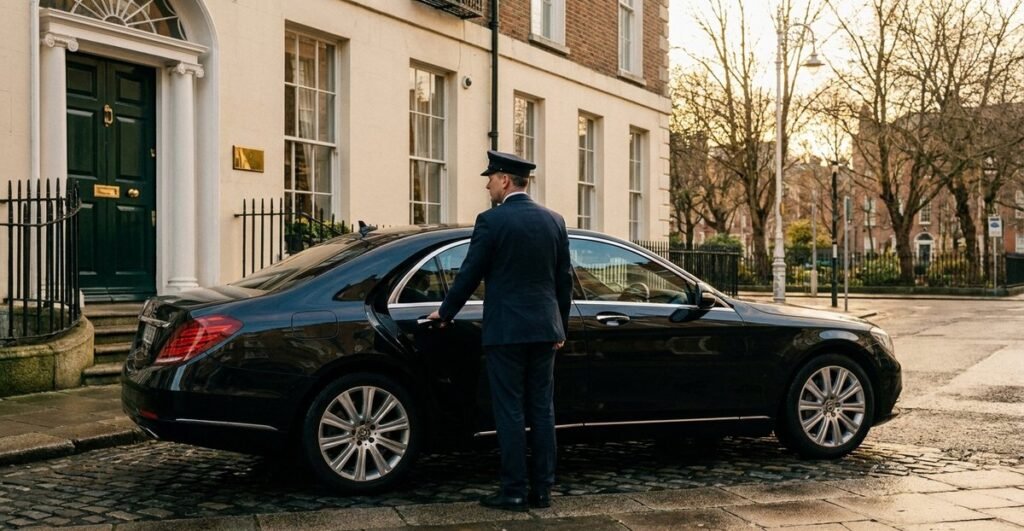
The single most useful thing to know before travelling with kids in Ireland is a legal one: children under 150cm or 36kg must use an appropriate child restraint in a car — and while licensed taxis are technically exempt from this law, that exemption doesn’t mean a rank taxi will actually have a suitable seat waiting for you. Most don’t. If you’re arriving with young children and planning to hail a taxi rather than pre-book, this is the detail that catches families out.
The rest of this guide covers what the law actually requires, what flying with an infant costs (it’s not free, on either major carrier), and where to go once you’re on the ground.
Travelling with young kids?
Tell us the ages and we’ll have the right car seat or booster already fitted when your driver meets you in arrivals.
The Car Seat Law
Under Irish law, any child under 150cm in height or 36kg in weight must travel in an appropriate child restraint in a car or goods vehicle — the driver is legally responsible for passengers under 17. The requirement runs by both height and weight, whichever threshold applies first, up to age 12 or 150cm.
The seat types, roughly by size:
- High-back booster seats suit children from around 15kg to 36kg.
- Backless booster seats are only legal for children weighing 22kg or more — under that, a child needs either a full car seat or a high-back booster.
- Rear-facing seats cannot legally go in the front passenger seat unless the airbag has been deactivated.
Only seats carrying EU type approval (E-mark, R129 or R44) are legal to use.
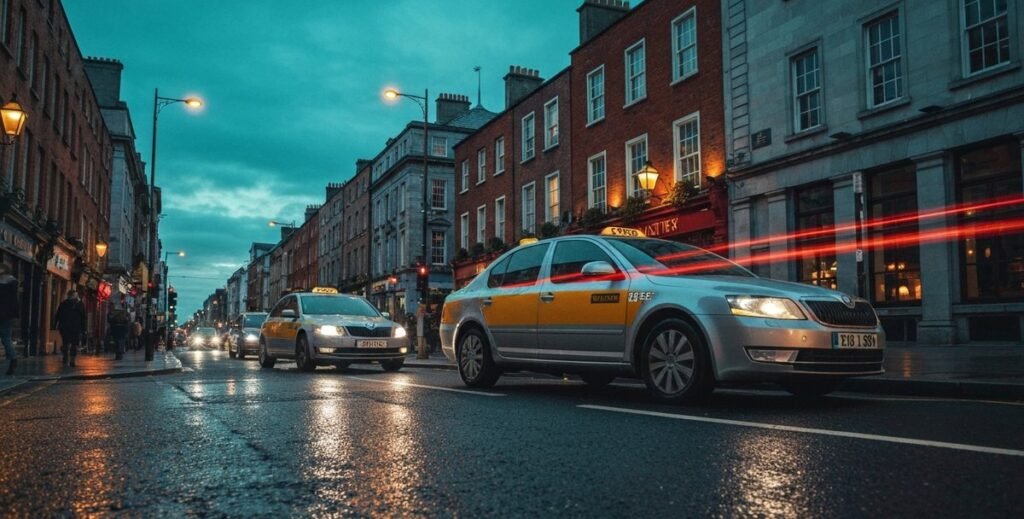
The taxi exemption, and why it doesn’t help you much. Licensed taxis are exempt from the child-restraint requirement under the law — but that’s a legal exemption for the operator, not a guarantee that a seat exists in the car. Rank taxis don’t routinely carry child seats, and marshals can’t promise one will be available for the next car. If you need a correctly sized seat waiting for you, book it in advance with a private operator rather than assuming the rank will sort it.
What Flying with a Baby or Toddler Actually Costs
A common assumption among first-time visitors is that infants fly free. On the two carriers most people use into Dublin, that’s not quite right:
- Ryanair charges a flat lap-infant fee of around €25 per one-way flight, for infants from 8 days old up to 2 years, seated on a parent’s lap.
- Aer Lingus charges a similar flat rate — around €25 per one-way flight within Europe — for a lap infant up to 2 years old. If you want your infant in their own seat with an approved forward-facing car seat, they’re booked as a child at the child fare instead of the flat infant rate.
Neither airline offers genuinely free infant travel, even on a lap. Budget for it rather than assuming it’s covered.
Family Attractions Worth the Detour
Dublin Zoo, in Phoenix Park, is the obvious starting point — over 400 animals across 70 acres, with feeding times and educational talks that hold younger kids’ attention better than a straight walk-through.
Airfield Estate, closer to the city centre and reachable by Luas, is a working urban farm where kids can collect eggs, feed calves, milk the resident Jersey cows and meet the estate’s donkeys — a genuinely hands-on alternative to a standard zoo visit.
Newbridge House and Farm, in Fingal, about 30 minutes from the city centre, combines an 18th-century Georgian mansion set on 370 acres with a working farm, a playground and a café — a good full-morning or afternoon stop if you’re already heading north of the city.
Practical Notes for the Journey Itself
Book the car seat when you book the transfer, not on arrival. Specify age or weight rather than just “a child seat” — the size categories above genuinely matter, and a seat sized for a 4-year-old isn’t safe or legal for a toddler.
Build in buffer at the airport. Immigration and baggage reclaim take longer with young kids in tow than the standard 25–40 minute estimate assumes. A flight-tracked pre-booked transfer absorbs that delay without an extra charge; a rank taxi has no such concept.
Pack snacks and entertainment for the transfer itself, especially on longer routes — a 2–3 hour drive to Kerry or Galway with tired kids goes considerably better with a plan for the middle hour than without one.
Frequently Asked Questions
Do I need a car seat for a taxi in Ireland?
Legally, licensed taxis are exempt from the child-restraint requirement, but that doesn’t mean a seat will be in the car — rank taxis rarely carry them. If your child needs a correctly sized seat, book a private transfer in advance rather than relying on the rank.
What’s the car seat law in Ireland?
Children under 150cm or 36kg must use an appropriate child restraint in a car, up to age 12 or 150cm, whichever comes first. High-back boosters suit roughly 15–36kg; backless boosters are only legal from 22kg up. Rear-facing seats can’t go in the front passenger seat unless the airbag is deactivated.
Do infants fly free to Ireland?
No, not fully. Ryanair and Aer Lingus both charge a flat lap-infant fee of around €25 per one-way flight for children under 2 travelling on a parent’s lap. A seat of their own, with an approved car seat, is booked at the child fare instead.
What are the best family attractions near Dublin?
Dublin Zoo in Phoenix Park, Airfield Estate’s working urban farm (Luas-accessible), and Newbridge House and Farm in Fingal, about 30 minutes from the city centre and combining a Georgian mansion with a working farm and playground.
Should I pre-book transport if I’m travelling with young kids?
Generally yes, especially for a Dublin Airport arrival or any longer cross-country trip. A pre-booked transfer with the right seat already fitted removes the two biggest friction points — finding a suitable car seat and absorbing a flight delay — that a rank taxi can’t solve.
How long should I allow for a Dublin Airport arrival with kids?
More than the standard estimate. Immigration and baggage reclaim typically take 25 to 40 minutes without kids; build in extra time with young children, and let a flight-tracked driver absorb any delay rather than a rank taxi with no such buffer.